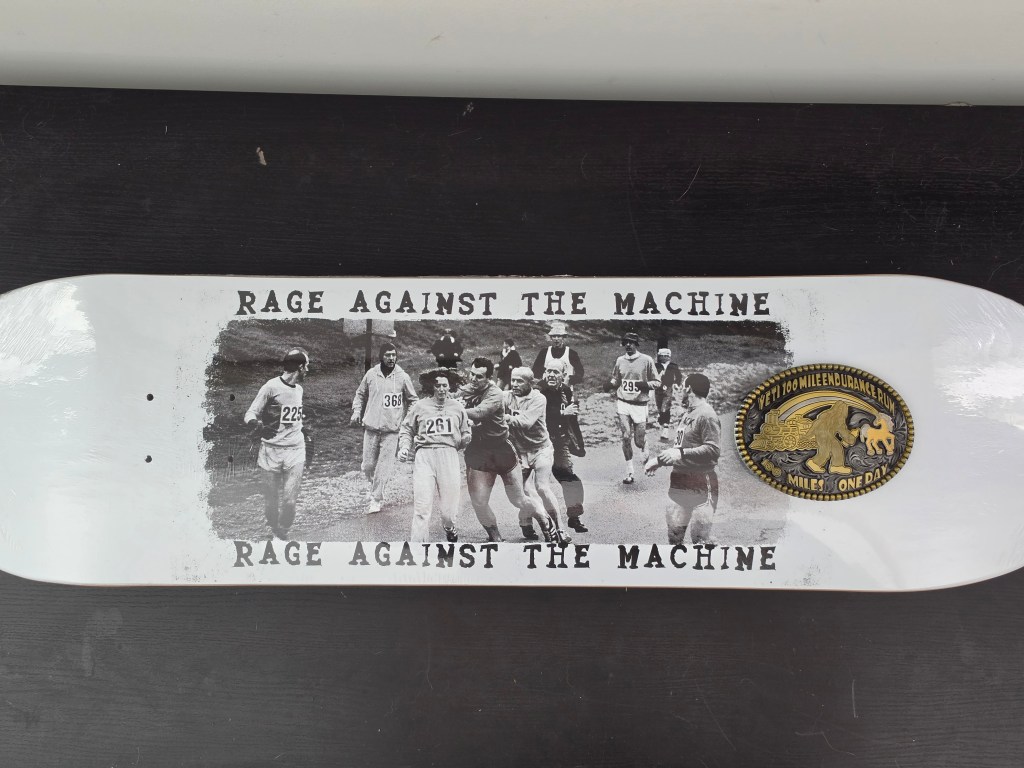
Why Yeti 100 Means So Much to Me
Yeti 100 is a race that I hold deep in my heart. It is held each fall on the Virginia Creeper Trail between Abingdon and Damascus, Virginia. My father was originally from nearby Kingsport, Tennessee, so this race has always felt a little like coming home. This year it was the first week in October.
The Course This Year
It is a 100 mile footrace that normally starts at Whitetop mountain and runs on what used to be a railroad track all the way down to Abingdon for 33 miles then you run back up the mountain turn around and come back to Abingdon to finish. This year, like last year, the course had to be modified because of the damage caused by Hurricane Helene.
This year we started in Abingdon and ran to Damascus and back 3 times. So essentially three-out-and-backs. This is the flattest part of the Creeper so, elevation was not a major factor that day. We worked off of 3 aid stations total Start-Abingdon, Alvarado, and Turnaround-Damascus. All fully stocked and we could have drop bags at each one. Weather for the day was gorgeous. We started in the mid-60s, and temperatures never climbed much beyond the mid-70s. There was a chance of rain the following morning, but overall the weather was nearly perfect.
The Goal
Going into this race my plan was to push for an under 24 hour finish. I’ve done around 7 races on this trail so I have experience and know what is coming for the most part so a 24 hour finish seemed very feasible. In my execution I only utilized two drop bag areas, the beginning and the end. This helps with organization and reducing the number of things that could go wrong i.e. missing bag, or forgetting something vital thinking its in another drop-bag area.
Miles 0–30: Everything Going to Plan
The first 30 miles went very smoothly. The plan was executed almost to the minute, my heart rate stayed low, and my nutrition was consistent and effective. Now I just needed to settle in and lock down the rest of the day and night.
Ultrarunning is a constant problem-solving sport. It’s rarely a question of whether something will go wrong. The real question is whether you can pivot when it does.
Miles 30–60: The First Problem
The next section from 30 to 60 miles I intentionally moved to a run/walk approach to save my legs for the night portion but I started developing pain around my ribs that seemed to be coming from my pack. At first it was just a dull ache and I could run through it but as we got closer to 100k it became painful and a real issue.
Miles 62–80: The Goal Changes
I switched out my pack for a different one that I had equally tested out as well as charged my watch and phone while hiking on the next section so it was a slow 62-80 miles. Hiking increased and became the major source of movement from here on out. I watched my sub-24-hour goal slip away, but I had to make a conscious decision to shift my mindset from racing the clock to simply moving forward.
Final 20 Miles: Just Keep Moving
The final 20 miles was a power hike to the finish. I was dealing with rib pain, calf pain and tightness, and rocks in my shoes. Every couple of miles I would stop and sit so I could shake out my shoes and give my calves a second to rest. Once I got back up everything worked well enough to move for another couple miles. I repeated this all the way to the end.
Almost 29 hours after starting I finished the Yeti 100.
What Went Right
Training buildup:
My buildup for this race was one of my best buildups I’ve ever had. I was extremely consistent, only got sick once and only missed 3 total runs and only 1 long run
Drop-bag strategy:
The two drop-bag locations I used instead of 3 worked out so well because it allowed me to go into the third aid station and really grab what my body was telling me to grab instead of getting something from my bag.
Shoes:
Shoes were on point, the only issue I had was when I had to power hike so much I started getting small rocks in my shoes more often because of the way my walking stride is so I had to shake them out periodically.
Planning and pacing:
The planning and execution of the plan I built was almost flawless. The first 30 miles were beautiful.
What Went Wrong
Nutrition:
I had practiced my nutrition throughout training and never had any issues with anything that I brought to the race. That being said my body decided that it didn’t like any of it during the race so after mile 50 I had to rely on what the aid stations had.
Rib pain:
The other issue that I had was pain around my rib cage that I hoped was only a bruise. This was the biggest concern I had most of the run. It was extremely painful but it wasn’t something that would stop me from being there in the race. At the time, the pain felt musculoskeletal and changed with movement, so I made the decision to stop running and continue hiking while monitoring it closely.
Calves:
The other physical issue was my calves. They became increasingly sore from all the extra walking, and I realized I had not trained enough for that much sustained hiking.
How I Problem-Solved
shoes/calves: stop briefly, empty shoes, let calves reset
ribs: stopped trying to run because running increased the pain
nutrition: switched to what aid stations had
pacing: shifted from performance goal to completion goal
What I Would Do Differently
The biggest thing I would have done differently would have been to train walking more in my training blocks. A separate long walk like a long run would have helped a lot in training. I also should have done a self check a lot earlier and I could have caught the rib pain before it became what it did.
The Biggest Lesson
Persistence and stubbornness go a long way in ultras. I had made up my mind that I was going to keep moving unless I was timed out or there was a legitimate reason I needed to stop. That mindset is something you need to have sometimes. You have to know why you want to do these things, because when it gets hard, your mind can make quitting feel like the easiest option.
You can prepare extremely well and still have race day throw something at you that you didn’t expect.
The goal isn’t to eliminate every problem.
The goal is to become good at solving problems while tired, uncomfortable, and frustrated.
That is ultrarunning.
You also have to be okay with being uncomfortable for a long time.
That doesn’t mean ignoring dangerous symptoms.
It means learning the difference between discomfort you can work through and a problem that actually requires you to stop.
Yeti didn’t go the way I planned.
But I finished.
And I learned more from that 29-hour finish than I probably would have learned from a perfectly executed sub-24.


Leave a Reply