In This Article You’ll Learn
- Why single-leg strength matters for trail runners
- How single-leg work helps with balance and stability
- Why it matters for climbing and descending
- Which single-leg exercises are most useful
- How to add them to your weekly routine
- Common mistakes to avoid
You’re moving through a technical section of a trail when one foot lands slightly off center on a rock. Your ankle shifts in your shoe. Your hip moves to stabilize you. Your core reacts and tightens. All of this happens on one leg. Then again and again. This is trail running. Every stride is a single-leg movement.
This is why single-leg strength deserves its own place in a trail runner’s training plan.
Trail Running Is a Single-Leg Sport
Every stride in running is basically repeated single leg contacts to the ground. Every stride requires your body to absorb force, stabilize, push off, control your hip, control your knee, and control your ankle. Very rarely are you going to have both feet planted at the same time no matter your pace.
Why Trails Make Single-Leg Strength Even More Important
Now add in the fact that most of the terrain you are running on is uneven, uphill, downhill, rocky, or even muddy. Trails can also be cambered, or sloped to one side, which changes how each leg has to stabilize and absorb force. The trail is constantly changing where your foot lands and how your body has to react. Running on roads gives very little change through the run, mostly flat, lower vertical change and very predictable. The stronger and more controlled you are on one leg the better prepared you are for the unpredictability of the trail.
Single-Leg Strength and Climbing
Climbing on trails is almost a guarantee at some point in the run. Climbing is essentially repeated single-leg pushing. Every time you step onto a rock, climb a steep grade, or power hike uphill, you are asking one leg to produce force and stabilize your body at the same time. Exercises like step-ups, split squats, and lunges help train that movement pattern in a controlled environment. It helps replicate the climbing form in a controlled environment allowing you to focus the movement to make it stronger.
Single-Leg Strength and Descending
Descending is just as important and often forgotten. When you go up a trail you will ore than likely have to come back down the trail. You are asking your body to control impact, absorb force, and to maintain hip and knee control .When you see experienced runners confidently moving downhill, it usually comes from a combination of practice, strength, technique, and comfort on technical terrain. Your body has to be able to control itself on every landing going at a quicker pace.
The Best Single-Leg Exercises for Trail Runners
These are the exercises that I prescribe to all of my runners.
- Step-Ups-useful for climbing, balance, quads and glutes
- Split Squats-focuses on leg strength, control, and stability
- Reverse lunges-these are beginner friendly single-leg loading movements
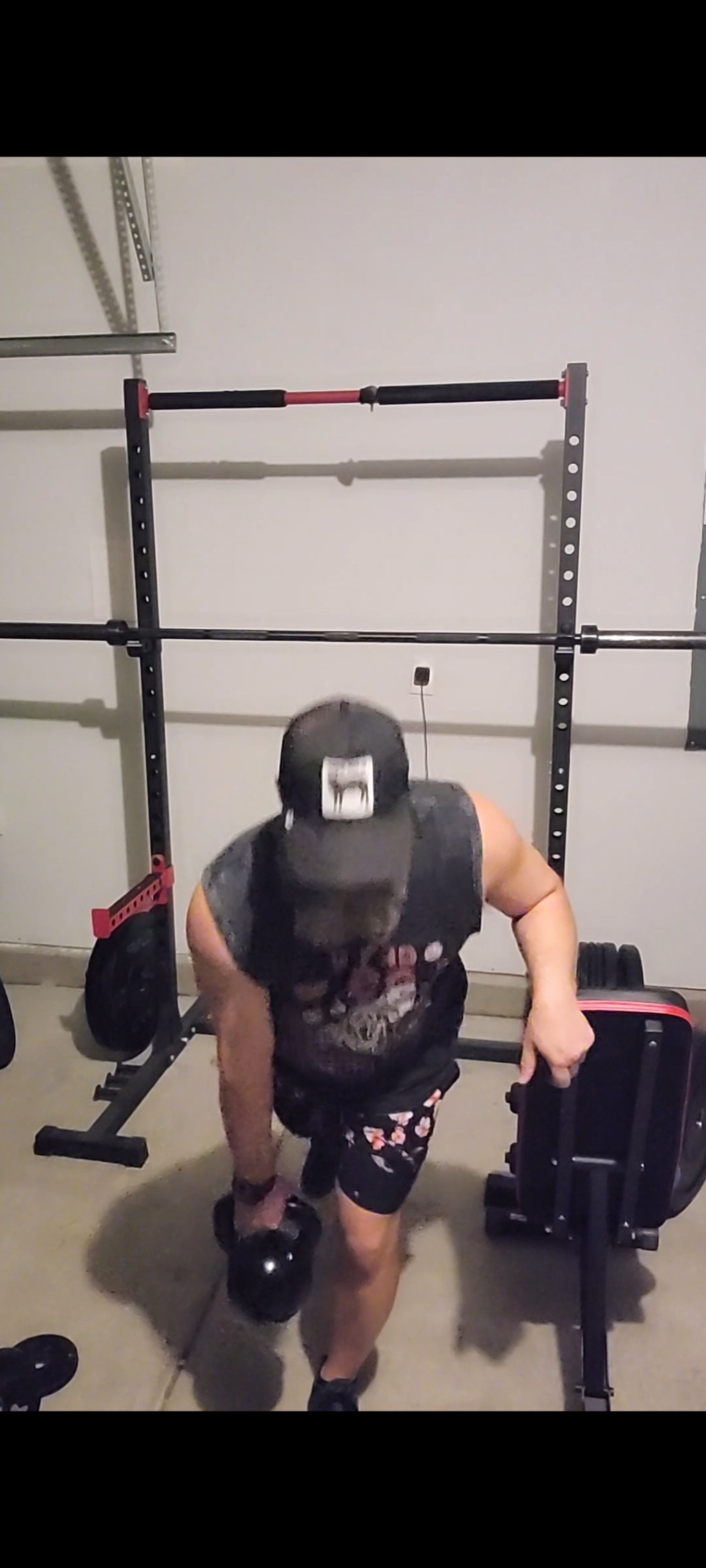
- Single-leg Romanian deadlifts-these focus on the hamstrings, glutes, balance, and hip control.
- Single-leg calf raises-great for calf strength, ankle stability, and your push-off
- Lateral Step-downs-useful for hip control, knee control, and descending
How Much Single-Leg Work Do You Need?
You don’t need or probably want to have an entire single-leg workout session so, I do not prescribe all of these to my athletes at once. I add one or two single-leg movements to each of their strength sessions.
A typical breakdown could look like this:
Strength Day 1:
- Step-ups
- Single-leg calf raises
Strength Day 2:
- Split squats
- Single-leg RDLs
Start With Control Before Weight
I do not want you to think that heavier is better with these movements. Just like your regular strength sessions you want good form before moving the weight up. Start with bodyweight and progress once you have mastered the movement. You should be able to control your knee, maintain balance, and move through the range of motion available to you before adding resistance. If you can’t control the movement without weight, adding weight won’t fix it.
Balance Is Not the Same as Strength
Balance is great to have! It is not however the same thing as strength. If you can stand on one leg and balance thats great but it isn’t enough on its own. You want to actually load the movement. Balance matters, but trail runners also need strength. Eventually, your single-leg work should involve resistance, not just standing on one foot.
What If One Side Is Stronger?
This is a very typical thing most people have some sort of imbalance in their body. This is also why single-leg exercises are important. While you are doing these movements you may notice that one side is shakier, faster, or has a larger range of motion. I would suggest that you do your weaker side first and then match the reps on the stronger side rather than doing extra work there. Yes, it is a single leg exercise but doing the stronger side second gives your weaker side the freshest lift. This is to try and bring them closer together in strength. You do not need to chase symmetry. There will more than likely always be a weaker side, but you can try to bring that gap closer together.
Common Mistakes
- Going too heavy too quickly
- Letting the knee collapse inward
- Rushing the reps
- Using momentum instead of control
- Ignoring the weaker side
- Doing balance drills but never adding resistance
- Choosing exercises that hurt instead of modifying them
Simple Single-Leg Strength Session
A typical session setup:
- Step-ups — 3 × 8 each side
- Split squats — 3 × 8 each side
- Single-leg RDL — 2 × 8 each side
- Single-leg calf raises — 3 × 12 each side
A personal tip: Single-leg strength is not about looking perfectly balanced. It’s about being strong enough to control your body when the trail doesn’t cooperate.
Final Thoughts
Trail running happens one step at a time.
One foot hits the ground.
One leg absorbs the impact.
One leg pushes you forward.
That is why single-leg strength matters.
You don’t need fancy exercises.
You need controlled movements, consistent practice, and enough resistance to make your body stronger.
Build strength one leg at a time.
Then take it to the trail.
Strength Series
Part 1: Why Trail Runners Need Strength Training
Part 2: The Best Strength Exercises for Trail Runners
Part 3: How Often Should Trail Runners Strength Train?
Coming Next:


Leave a Reply