In this article you’ll learn
- What to eat before race day
- When to eat before the start
- Foods to avoid
- My personal race morning routine
- Common mistakes to avoid
Your alarm goes off. It’s 4:00 a.m. It’s race day. You’ve poured months of hard work into this day. You’ve practiced everything on the long run, You’ve trained your legs, mind, and gut. You’ve packed everything but the kitchen sink so you’re prepared for anything. You walk into the kitchen and you draw a blank on what in the world you’re supposed to eat right now! Should you just throw a pop tart in your mouth and roll out?! Honestly maybe…
Race morning nutrition doesn’t have to be complicated. In this article I will show you how I prepare my athletes for race day and how to find the routine that works best for you.
Race day nutrition doesn’t have to be an unknown even if you don’t race all the time. First, lets talk about why it’s important. This is the time you get to top off all your glycogen stores so you go into the run with a full tank. Just like race cars you don’t start the race with a half tank. This will also prevent you from starting hungry, helps settle your stomach, and helps to avoid GI issues. You should have been adding in carbohydrate rich meals each day leading up to this point. Breakfast is simply the final touch before heading to the starting line.
The best times to eat before a race vary from person to person but the general rule is to have something 1-4 hours ahead. 3-4 hours ahead of time is good for a larger meal, 1-2 for a smaller easy to digest meal and then 30-45 minutes before start time for a small very easy to digest carbohydrate snack. You don’t need to eat at every one of these time points. You simply need a plan that you’ve practiced. So what should those meals actually be?
CALM is a great acronym to use to help you decide what you need to eat.
C.A.L.M.
Carbohydrate-rich
Already tested
Low in fiber and fat
Mild on your stomach
There are lots of options that are available to you a few examples of those are:
Option 1
Bagel
Banana
Sports drink
Option 2
Oatmeal
Honey
Banana
Option 3
Toast
Peanut butter (light)
Jam
Option 4
Rice
Eggs (if tolerated)
Banana
Option 5
Your usual breakfast
If it has worked during training.
There are of course items that are not recommended not because they are “bad” food but because they are usually less tolerable on the gut. Some of those items are:
Greasy breakfast
Lots of bacon
Spicy foods
Large salads
Excess fiber
Large amounts of dairy (if it bothers you)
I would also like to say that I personally know experienced ultra runners that always have these items before a race but they know that it works for them and have practiced it beforehand. Everything comes back to practicing, which is why I wouldn’t tell my athlete to eat a healthy breakfast if I know that they don’t ever eat a healthy breakfast before a run ( or ever). Your body doesn’t care what the latest Instagram influencer ate before their race. It cares about what you’ve practiced. Nothing new ever gets done on race day. no new nutrition, no new socks, no new breakfast.
Coffee. Everyone asks about coffee. Do you drink coffee everyday? if yes then have coffee before the race. If no then don’t. Side note if you usually have one scoop of coffee in the morning don’t decide to have a triple shot of espresso the morning of a 50K. Do what you normally do.
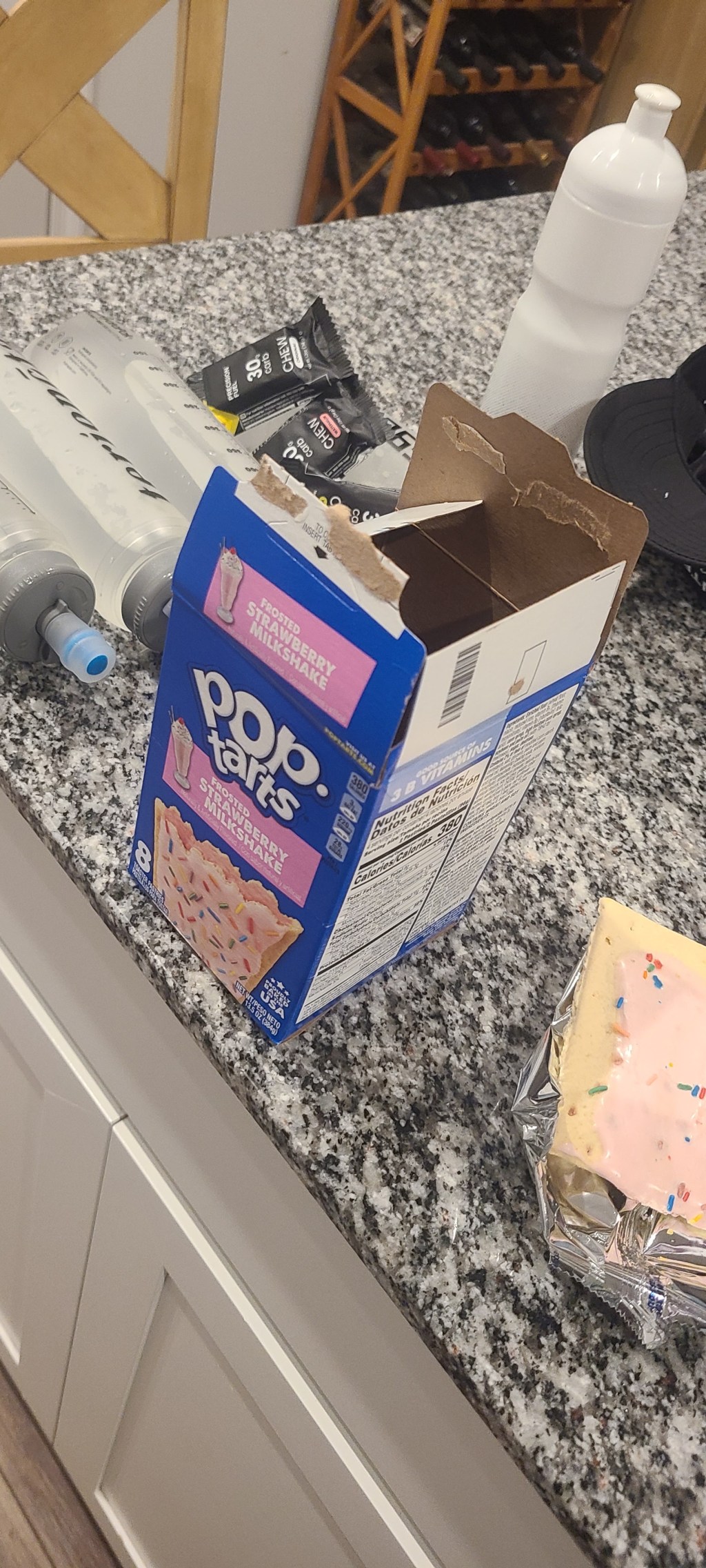
My personal morning and race day routine starts the day before when I make my breakfast. I have oats, milk, protein, chia seeds, Greek yogurt as an overnight recipe literally everyday. On race morning I have this generally 2 hours before the start time. I then have a regular pop tart ( I like strawberry milkshake flavor) about 45 minutes ahead of the start. If the race is shorter than a marathon I will have a morning coffee about the same time as the pop tart. If it’s longer than a marathon I actually have no caffeine until later in the race. I am also notorious for being able to fall asleep anywhere so in between breakfast and snack time I nap.
Common mistakes that I have seen at ultramarathons first hand include: Trying something new Skipping breakfast, Eating too much, Eating too little, Eating too close to the start, Forgetting hydration (Always Be Drinking)
Whether you’re preparing for your first 50K, marathon, or ultramarathon, these same principles apply. Remember what works for me may not work for you. We are an experiment of one. You should practice this just as much as you practice everything else! Take notes of what works and what doesn’t. Also remember just because it didn’t work once doesn’t mean it won’t ever so try everything a few times.
Your race morning breakfast doesn’t need to be perfect.
It needs to be familiar.
The best race-day meal is the one you’ve already practiced during training.
Don’t save your nutrition strategy for race day.
Build it one long run at a time.
I am also adding a simple morning of checklist
Race Morning Checklist
☐ Eat your planned breakfast
☐ Drink your planned fluids
☐ Pack all of your race nutrition
☐ Fill your hydration vest or bottles
☐ Charge your GPS watch
☐ Pack your race bib and safety pins
☐ Apply sunscreen or anti-chafe products
☐ Use the restroom before heading to the start
☐ Double-check your gear
☐ Relax and trust your training
Continue Learning About Trail Nutrition
➡️ How Many Carbs Do You Need During a Trail Race?
➡️ How Often Should You Eat During a Trail Race?
➡️ (Coming Soon) Best Foods During a Trail Race
➡️ (Coming Soon) Hydration & Electrolytes


Leave a Reply