In This Article You’ll Learn
- Which strength exercises give trail runners the most value
- Why single-leg work matters so much
- Which muscles matter most for climbing and descending
- How to choose exercises without overcomplicating your routine
- How to build a simple trail-running strength session
You’ve decided to finally take the leap and add strength training into your run training (Awesome by the way)! You walk into your local gym and it’s loaded with cool-looking contraptions, dumbbells, benches, racks and gym-goers doing exercises you saw on the Gram earlier. Where do you start?
The good news is that runners don’t need to do 25 different exercises. We need just a handful of movements that help us climb, descend, stabilize on uneven terrain, maintain good posture, and stay strong when our legs get tired.
Let’s keep things simple:
What makes an exercise useful for trail runners?
You’re looking for movements that train the muscles you use most while running, along with the supporting muscles that help stabilize your body. Exercises such as squats, hinges, single-leg lifts, calf-focused, core-focused and upper body/posture strengthening. Trail runners don’t need exercises just because they look athletic. We need movements that actually support what we do on the trail.
Here are 8 solid movements to put into your routine.
1. Goblet Squats:
Focuses on the glutes, quads, and hips. It’s useful for climbing, power hiking, ascending steep terrain, and general leg strength. Starting out you want to do bodyweight squats, then progress to a weighted goblet squat followed by heavier goblet squats and eventually into a front or back squat if it’s appropriate.
A big tip here is that you don’t need to chase depth use your own range of motion that you can control through the movement. I personally cannot go below parallel because of the range of motion available in my knees.
2. Romanian Deadlift:
Focuses on the posterior chain-hamstrings, glutes, back , and hips. These are especially useful for climbing and maintaining strength late in races. It is also one of my personal favorite exercises. I would start here with a regular bodyweight RDL then move to weighted RDLs. Start by learning the hip-hinge movement without weight. Once you can control it, begin adding resistance. During this exercise you want to think about pushing your hips backward rather than squatting down, keep your weights close to your body and again use your ROM for how low you hinge.
3. Step-Ups:
Step-ups are especially valuable for trail runners. This movement looks a lot like climbing. It helps with single-leg strength, hip stability, quads, and glutes. It is also very beginner friendly all you need is something to step up safely on. This is the exercise I would pick immediately for a trail runner.
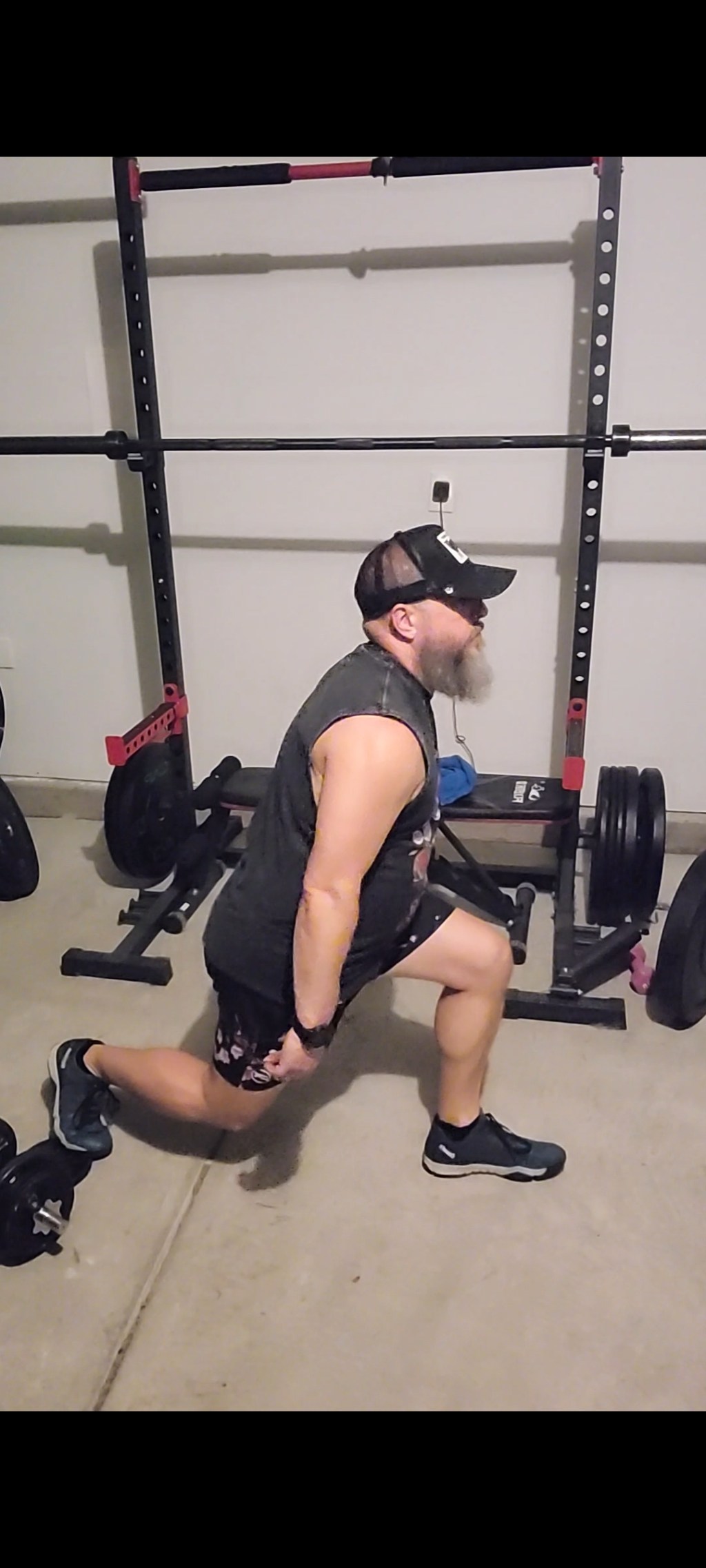
4. Split Squats or Reverse Lunges:
Focuses on single-leg strength, balance, hip control, quads, and glutes. There are multiple variations of this exercise. Bulgarian split squats are popular, but they aren’t mandatory. I personally use regular split squats because they work better with my knee and range of motion.
5. Single-Leg Romanian Deadlift:
This is another favorite and should automatically be on a trail runner’s strength training regimen. It focuses on balance, hamstring strength, glute strength, foot and ankle stability and hip control. Remember running and especially trail running is a single-leg sport. When you work with me you will always have single-leg workouts in your planning and this is the main one I use.
6. Calf Raises:
These help with climbing, descending, push-off, long hours on feet. There’s a saying that “The calves are the heartbeat of the legs”. Use both straight-knee and bent-knee calf raises. Changing the knee position shifts the emphasis between different muscles of the calf complex, so both have value for trail runners. Calves are very easily forgotten about while training until they decide to start screaming at mile 30.
7. Core-Dead Bugs, Planks, or Pallof Press:
Your core helps keep your trunk stable while your arms and legs move over uneven terrain. For runners, core training is less about getting a six-pack and more about controlling movement when you’re tired.
8. Rows or Push-ups:
Benefits of doing rows or push-ups include posture, arm swing, carrying a vest and poles, general strength, and staying upright late in an ultra. Yes, your legs are doing most of the running but the rest of your body works in unison with them. The arms don’t get the day off in a 24-hour race.
Do you need all 8 every workout?
No. You don’t need all eight movements in every session. Pick a few that cover the major movement patterns and stick with them long enough to actually get stronger. A beginner session could be:
- Goblet squat 3 × 8–10
- Romanian deadlift 3 × 8–10
- Step-ups 2 × 8 each side
- Single-leg calf raises 3 × 10–15
- Dead bug 2 × 8 each side
- Dumbbell row 3 × 8–12
This is a typical workout I would prescribe to a trail runner starting out on their journey of strength training.
Another Big Question.
How heavy should I lift?
Start with bodyweight until you can perform the movement correctly. Then move to weight you can control with good form while still feeling like the last few reps require some effort. If you are finishing every set like you could easily do 10 more it’s probably time to add a little more resistance. You should finish most sets feeling like you probably had another 2–3 good reps available.
Common Mistakes
- Trying to learn too many exercises at once
- Changing workouts every week
- Ignoring single-leg work
- Never increasing resistance
- Lifting to failure every session
- Choosing exercises because they look impressive
- Using poor form just to lift heavier
Simple exercises done consistently beat overcomplicated exercises done occasionally. You have to be consistent. You don’t need the perfect strength program. You need one you’ll actually follow.
Final Thoughts
You do not need a complicated strength routine to become a stronger trail runner.
Squat.
Hinge.
Train one leg at a time.
Strengthen your calves.
Build a strong core.
Don’t forget your upper body.
Then do all of it consistently-just like running.
The goal isn’t to get big and bulky.
The goal is to build strength you can use on the trail.
Strength Series
Part 1: Why Trail Runners Need Strength Training
Part 2: The Best Strength Exercises for Trail Runners
Coming Next: How Often Should Trail Runners Strength Train?


Leave a Reply