In This Article You’ll Learn
- How many strength sessions most trail runners need
- How to fit lifting around your run schedule
- When to strength train during heavy mileage weeks
- How hard your strength sessions should be
- When to reduce strength before a race
- How to avoid making strength training interfere with running
You already know that strength training matters. We all know that! You even know what exercises you need to do. The real question about it is where do we fit it into an already busy week of easy runs, speedwork, long runs, run club, real life job, real life commitments, kids, family, and of course the unpredictability of life.
The good news is that you do not need to live in a gym to get stronger. You just need a plan that will work with you.
How many days per week?
Two quality strength sessions per week is a practical starting point for most trail runners.
For most runners and trail runners 2 strength sessions per week is enough to make progress without turning strength training into a second sport. Some runners may benefit from three sessions during lower-mileage periods, while others may need less depending on training load, recovery, experience, and available time. More isn’t automatically better.
Where should Strength go in the week?
For most trail runners, running is the primary sport, so strength training should support your key run sessions rather than compete with them. Once again everyone is trying to accomplish different things but as a starting point I would pair one strength day with an easy run day and then the other strength session on a day with no run. A possible example could look like this:
- Monday – Easy run & strength
- Tuesday – Rest or easy
- Wednesday – Speedwork or Running Workout
- Thursday – Strength
- Friday – Easy run
- Saturday – Long run
- Sunday – Rest/recovery
There are two good ways to approach strength scheduling. You can consolidate harder training on the same day to protect true recovery days, or separate strength from your hardest run if doing both together hurts the quality of either session. The right choice depends on the runner. In this example you do a strength day with an easy run then your second strength day is the day after your speedwork day so your body has the next day to recover before going into your long. I would rather see you tired on one planned hard day than slightly tired most of the week.
My personal plan is similar to the example shown.
- Monday – Strength & Easy run
- Tuesday – Rest day
- Wednesday – Speedwork
- Thursday – Strength
- Friday – Easy run
- Saturday – Easy long run
- Sunday – longest run
This is what works with my schedule.
Should you lift before or after running?
If running is your priority and both sessions matter that day, run first—especially if you’re doing intervals, tempo work, hills, or another quality session.
On an easy-run day, the order matters much less. Personally, I often prefer lifting first. That works for me.
How Hard should a strength session be?
The simple answer is: A good strength session should not leave you destroyed.
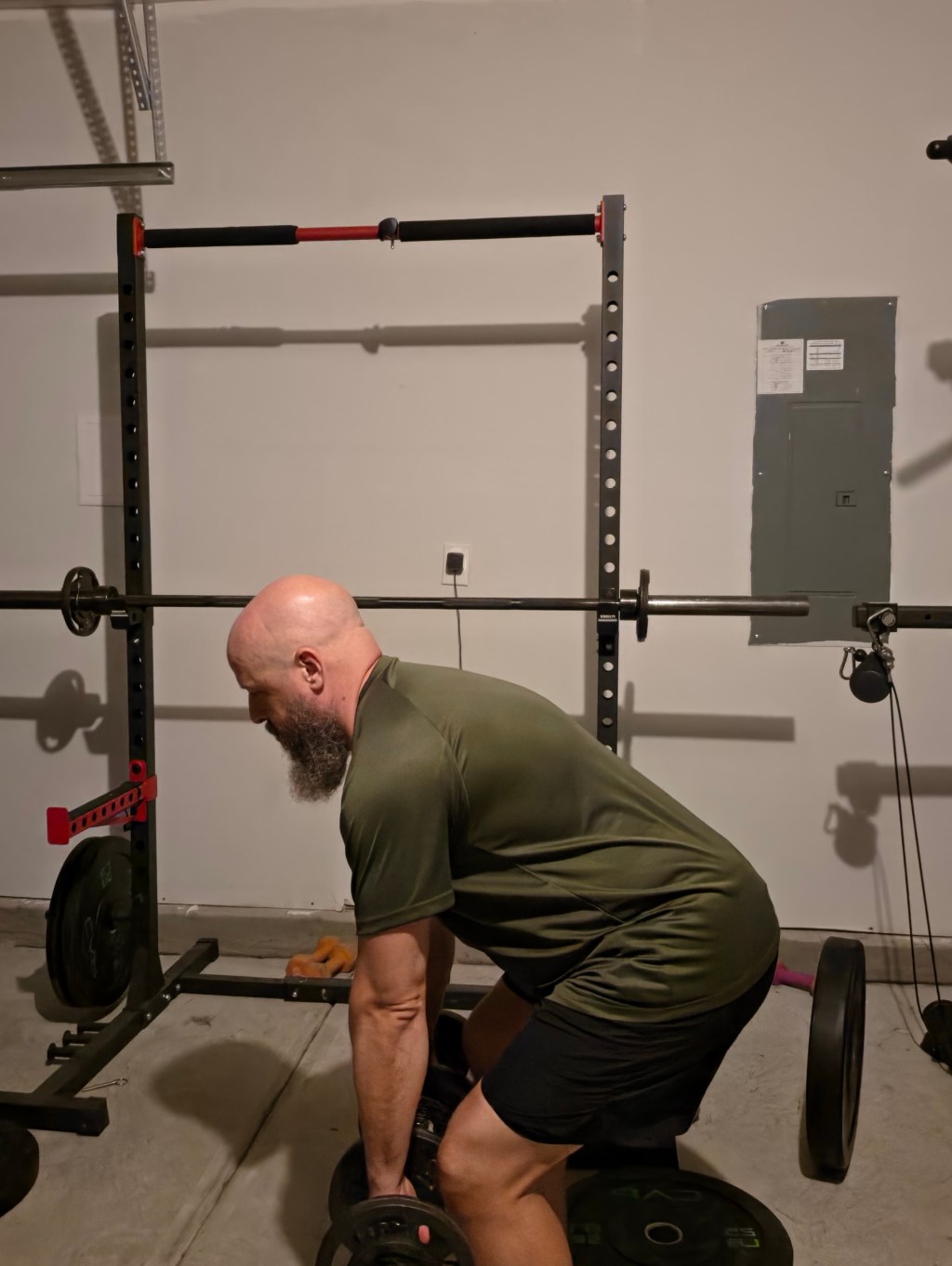
A strength day should challenge you without ruining your next run. Your focus in the gym is not to become a huge bulky person. It is to help your running. You should follow these easy guidelines on gym days:
Last few reps should feel difficult
Form should stay solid
You should not be so sore that normal running feels altered for days
What about long run weekends?
This is about timing and planning. Most runners probably don’t want their hardest lower-body strength session immediately before a long run. If Saturday is your long run then Friday is probably not the best day to go to the gym. There are certain types of training where planned fatigue is what you are looking for but that is not for a typical week.
How Strength Changes Through Training Cycles
Just like your running plan there are different cycles that you go through for your strength sessions and they should line up so they complement each other.
Base Phase
More room for strength progression
Build Phase
Maintain strength while running volume increases.
Peak Phase
Reduce strength volume, keep some intensity.
Race Week
Minimal strength, mostly maintenance/mobility if anything.
If you look at this planning it gives you more strength training during times that you have less running. As running volume and race specificity increase, strength volume can gradually decrease so it doesn’t compete with your most important run training.
What If I Only Have 20 Minutes?
If all you can maneuver into your day on your strength day is 20 minutes then do 20 focused quality minutes. This is better than doing nothing and skipping it completely. A quick 20-minute session could look like this:
- Goblet squat
- RDL
- Step-ups
- Calf raises
- Dead bug
2 sets each.
I keep a kettlebell in my office in case all I have is 20 minutes that day at least I can get some form of resistance training done. Consistency beats waiting for the perfect one-hour gym session.
Signs You’re Doing Too Much
This is another common question that I get from athletes. Your strength training should support your running, not sabotage it. Watch for constantly heavy legs, declining run workouts, unusually flat long runs, soreness lasting several days, sloppy form, dropping motivation, or the feeling that you’re never fully recovering.
Burnout is real, and you can absolutely overdo a good thing.
If several of these signs keep appearing, you may not need to eliminate strength training. Instead, try reducing the weight, number of sets, or total session time.
Sample Weekly Schedules
Runner Training 3 Days Per Week
- Monday – Strength
- Wednesday – Run
- Friday – Run & short strength
- Weekend – Long run
Runner Training 4 Days Per Week
- Monday – Easy run & strength
- Wednesday – Workout
- Friday – Easy run & strength
- Weekend – Long run
Runner Training 5–6 Days Per Week
Keep strength on easy or workout days so true recovery days stay protected.
Common Mistakes
- Adding too many strength days
- Putting heavy legs before every key run
- Treating soreness as proof of a good workout
- Never reducing strength during peak training
- Skipping strength completely when mileage increases
- Changing the schedule every week
- Trying to make every session hard
You probably wouldn’t schedule your hardest speed workout immediately before your most important long run, and strength training deserves the same planning. Strength Sessions should fit around your running, not fight against it. It is a mutual relationship that both have ebbs and flows of work and progress
Final Thoughts
You do not need five strength sessions a week to become a stronger trail runner.
You need enough strength work to build durability without taking away from the running that prepares you for race day.
For most runners, two consistent sessions per week is a great place to start.
Keep it simple.
Protect your key runs.
Adjust as your mileage changes.
And remember:
Strength should support the trail, not compete with it.
Strength Series
Part 1: Why Trail Runners Need Strength Training
Part 2: The Best Strength Exercises for Trail Runners
Part 3: How Often Should Trail Runners Strength Train?
Coming Next: Single-Leg Strength for Trail Runners


Leave a Reply